
Investing in Early Learning: What Families Need to Know with Paige Berg
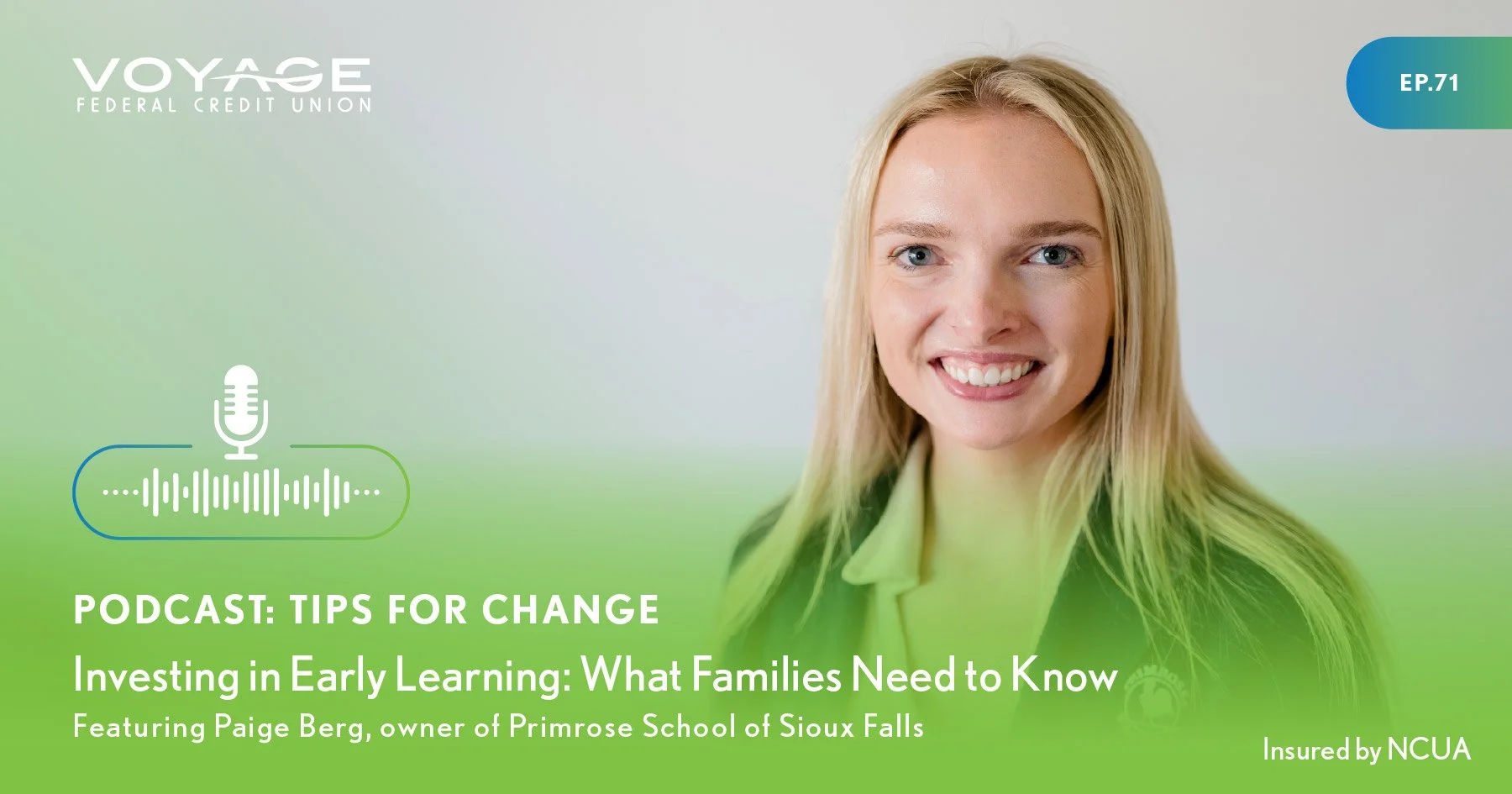
For many families, childcare is one of the first major financial decisions they’ll make after welcoming a child. But according to Paige Berg, owner of Primrose School of Sioux Falls, families should think of early childhood education as more than just daycare — it’s an investment in a child’s long-term growth, development, and future success.
On this episode of the Tips for Change podcast, Paige shared her journey into franchise ownership, what parents should look for in a childcare provider, and how families can financially prepare for this important stage of life.
Why Early Childhood Education Matters
Research continues to show that the first five years of a child’s life are critical for development. In fact, Paige shared that nearly 90% of a child’s brain develops during those early years. High-quality early education can influence:
Kindergarten readiness
Social and emotional development
Communication skills
Long-term academic success
Future earning potential
Beyond academics, children are learning how to manage emotions, build relationships, solve problems, and interact with others in group settings. Those foundational skills can shape how they navigate school and life later on.
As Paige explained during the podcast, many of the most impactful moments in childcare may seem small — reading books together, practicing sharing, or helping children work through big feelings — but those interactions build confidence, trust, and emotional security.
Childcare Is More Than Supervision
One of the biggest misconceptions families often have is viewing childcare strictly as supervision. While safety and care are essential, high-quality early education goes much deeper.
Programs focused on early learning often include:
Structured curriculum
Teacher training and continuing education
Social and emotional development strategies
Intentional classroom environments
Developmentally appropriate learning activities
Communication with families
Safety and security protocols
Paige emphasized that not all childcare facilities are created equal. Touring facilities, asking questions, and trusting your instincts are all important parts of the process.
Questions parents should ask when evaluating childcare include:
What does teacher training look like?
Is there a structured curriculum?
How are classrooms managed?
What safety procedures are in place?
How are meals and snacks prepared?
How do teachers support emotional development?

Understanding the Cost of Childcare
For many families, childcare costs can come as surprising — especially for first-time parents. However, Paige encourages families to reframe childcare as a long-term investment rather than a short-term expense.
The cost of high-quality childcare often reflects:
Competitive teacher wages
Staff training and retention
Curriculum development
Food and nutrition programs
Classroom materials and equipment
Safety and security systems
Facility maintenance
In high-quality programs, people are the largest investment. Experienced teachers and strong leadership teams help create stable, supportive environments where children can thrive.
How Families Can Financially Prepare
Planning ahead can make childcare expenses feel more manageable. Paige recommends families start researching childcare options before their baby arrives whenever possible.
Some practical financial preparation strategies include:
Build Childcare Into Your Budget Early
Once you begin thinking about growing your family, start estimating potential childcare costs and include them in your monthly budget planning. For many new parents, balancing finances, routines, and overall wellness can feel overwhelming during the first few years of parenthood. Our blog on How New Parents Can Improve Sleep offers helpful tips for navigating those early transitions while staying financially prepared.
Explore Employer Benefits
Many employers offer Dependent Care Flexible Spending Accounts (FSAs), which allow families to use pre-tax dollars for qualifying childcare expenses.
Start Teaching Financial Wellness Early
Financial planning doesn’t stop with parents. As children grow, introducing age-appropriate money habits can help them build healthy financial skills for the future.
Voyage’s guide to Teaching Kids About Money and Financial Goals offers simple ways families can begin teaching saving, budgeting, and financial responsibility at every age.

The Growing Importance of Childcare
As communities like Sioux Falls continue to grow, access to reliable childcare has become an increasingly important conversation — not just for families, but for the workforce and local economy as a whole.
Parents need dependable, high-quality childcare options to confidently pursue careers and support their families. At the same time, children benefit from environments intentionally designed to support learning and development during their most formative years.
Final Advice for Parents
Paige’s biggest advice for parents? Tour, ask questions, and trust your instincts.
Choosing childcare is one of the most personal decisions a family can make. Every family’s priorities and needs are different, but taking time to research options carefully can help parents feel confident in their decision.
As Paige shared during the conversation, families should never feel pressured to settle when it comes to their child’s care and development.
Episode Mentions:
About the Guest
Paige Berg is the owner of Primrose School of Sioux Falls, a premier early childhood education and childcare center focused on helping children build a strong foundation for lifelong success. A Sioux Falls native and mother of two, Paige combined her background in healthcare, passion for children, and personal experience searching for high-quality childcare to bring Primrose to the Sioux Falls community. Through intentional leadership, curriculum-focused learning, and a commitment to building strong relationships with families, Paige is dedicated to creating an environment where children can thrive academically, socially, and emotionally.